
The goal of this blog is to document my chess development from zero to 1500 ELO rating on Chess.com. At least that is the goal. However, I try to do so with my own style of Chess, Heerlen Chess. I will explain what this means:
Permanent initiative through controlled disorder, material realism, and psychological pressure — without rushing for mate. Heerlen chess doctrine
This isn’t romantic all-out attacking chess, and it’s not dry technical chess either. It’s something in between:
- You don’t play passive, “neutral” moves
- You don’t gamble on one forced mating line
- You don’t aim for early simplifications or easy draws
Instead, every move should force a reaction.
If your opponent has to think, calculate, and feel uncomfortable — you’re doing it right.
In Heerlen Chess, a move is only “legal” if it does at least one of the following:
- Creates a threat
- Restricts the opponent
- Prepares future disruption
If a move does none of these, it doesn’t belong in your game. Heerlen chess doctrine
Disruption Over Direct Attack
Heerlen Chess doesn’t focus on immediate mating attacks.
The goal is to destabilize the opponent’s position:
- Asymmetrical pawn structures
- Early tension (especially on the kingside)
- Awkward piece placements for the opponent
- Long-term weaknesses that don’t disappear
If the position looks “ugly” but active, that’s often a good sign.
The opponent is under pressure — even if nothing is being captured yet. Heerlen chess doctrine
Instead of asking “Can I mate soon?”, Heerlen Chess asks:
“Is my opponent’s position becoming harder to play?”
Initiative First, But Not Suicide
This doctrine is aggressive, but not reckless.
Sacrifices are only acceptable if they bring lasting compensation, such as:
- Permanent king exposure
- Structural damage
- Strong outposts
- Dangerous passed pawns
A sacrifice that only works if the opponent makes one mistake is not “Heerlen-approved.”
But a sacrifice that makes the opponent suffer even with perfect defense? That fits perfectly. Heerlen chess doctrine
The idea is simple:
Don’t force mate — overload the board.
The Queen as an Early Disturber
In many classical systems, early queen moves are discouraged.
In Heerlen Chess, the queen is allowed to come out early — if it creates problems.
Good early queen moves:
- Force pawn weaknesses
- Cause awkward piece development
- Create long-term structural damage
Bad queen moves:
- Attack only one target
- Let the opponent gain free development
The queen isn’t there to win material quickly —
It’s there to disturb the opponent’s plans. Heerlen chess doctrine
Pawn Promotion Over Pretty Mates
Another key idea of the Heerlen Doctrine is its obsession with passed pawns.
Instead of dreaming about checkmate, you constantly ask:
“Does this help me create or advance a passer?”
Many Heerlen games are won not by spectacular mates, but by pawn promotion, often while queens are still on the board. Heerlen chess doctrine
It’s ruthless, practical, and extremely effective.
The King: Walk, Don’t Hide
In Heerlen Chess, castling is optional.
King safety is not ignored — but it is calculated, not assumed.
The king may stay in the center or even walk forward later in the game if the position allows it.
Instead of hiding, the king becomes an active piece when the time is right. Heerlen chess doctrine
The Mental Philosophy Behind Heerlen Chess
The doctrine is not just about moves — it’s also about mindset.
Key rules:
- You don’t offer draws
- You don’t accept draws
- You stay emotionally neutral after wins and losses
The board is not validation.
Chess is serious — but life is bigger.
Why Heerlen? The City Behind the Doctrine
The Heerlen Chess Doctrine isn’t just a chess philosophy.
It’s also a reflection of where it comes from.
Heerlen, a city in South Limburg, The Netherlands, has never been about elegance, polish, or playing it safe. Its history is shaped by coal mines, industrial struggle, economic collapse, and rebuilding. This is a place that learned to survive through pressure, adaptation, and resilience.
That mentality translates naturally to the chessboard.
Heerlen doesn’t represent smooth, positional perfection.
It represents grit, disruption, and refusing to back down.
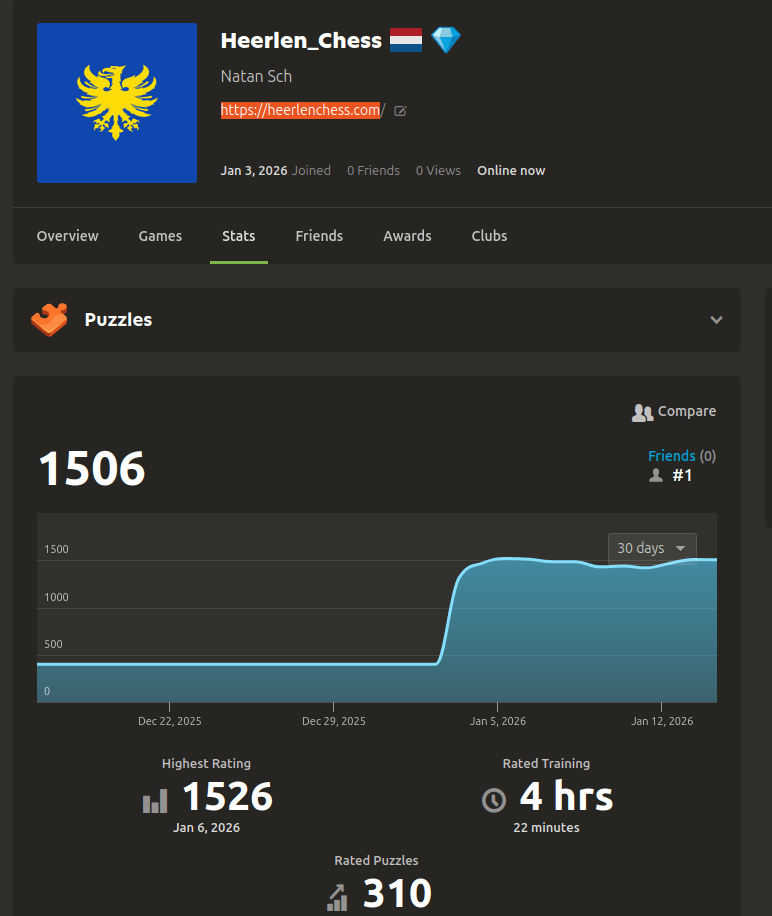
My puzzle rating remains around 1380-1500 in the first week
The game below (I play white) shows Heerlen style Chess that I won against the 1200 ELO bot:
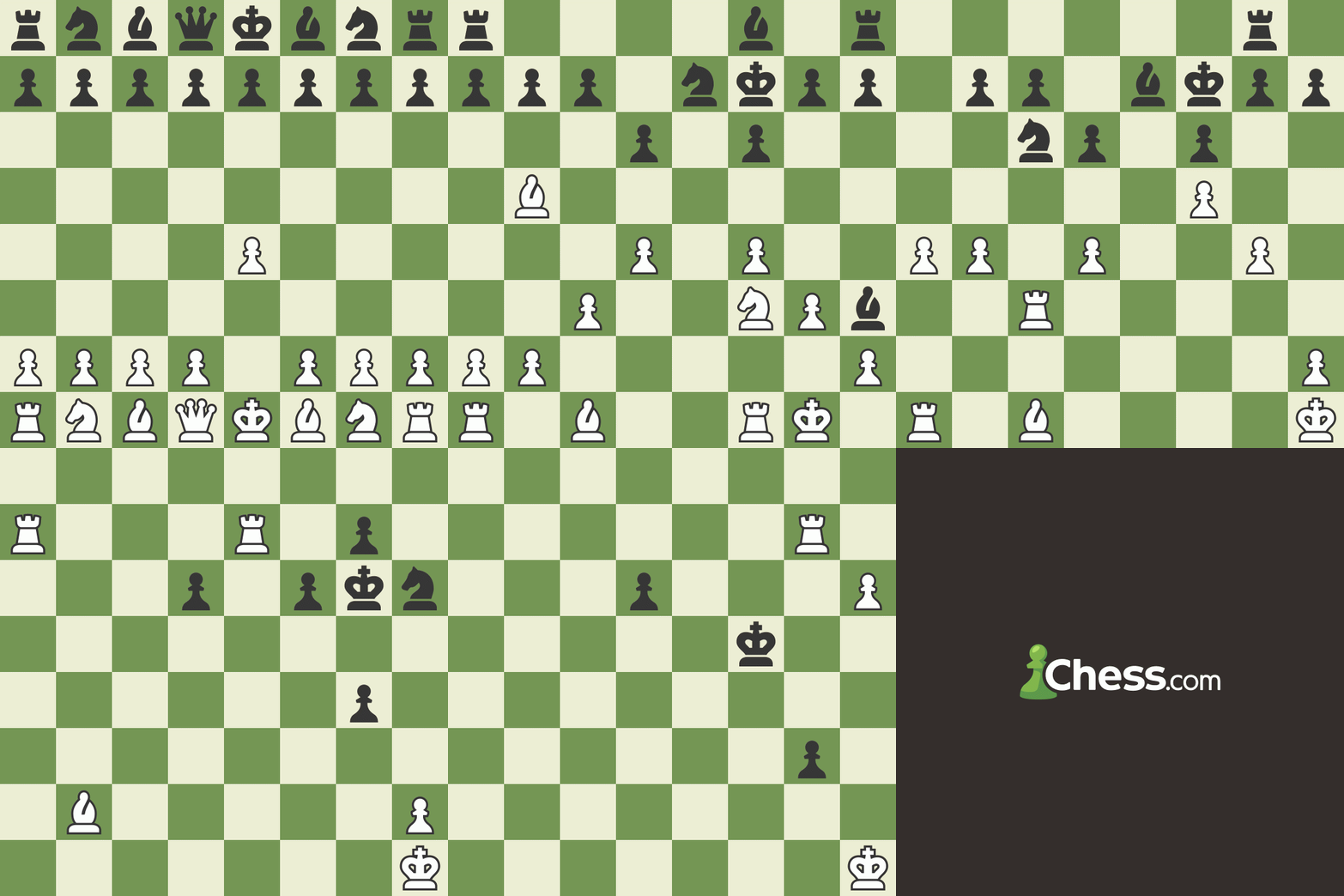
 Heerlen Chess
Leave a comment